A closed steel building in the tropics becomes a heat trap. Ventilation is the simplest way to keep the inside close to outdoor temperature, carry away humidity and reduce condensation. In a pre-engineered building, ventilation is provided mostly by two accessories that work as a pair: ridge ventilators at the top of the roof and wall louvers low in the walls.
How natural ventilation works
Warm air is lighter than cool air and rises. If there is an opening at the top of the building, warm air escapes through it and draws cooler air in through openings low in the walls. This is called the stack effect. Wind adds to it: air moving over the ridge creates suction at the ventilator, and wind on the walls pushes air through the louvers. The taller the building and the larger the openings, the stronger the flow.
Ridge ventilators
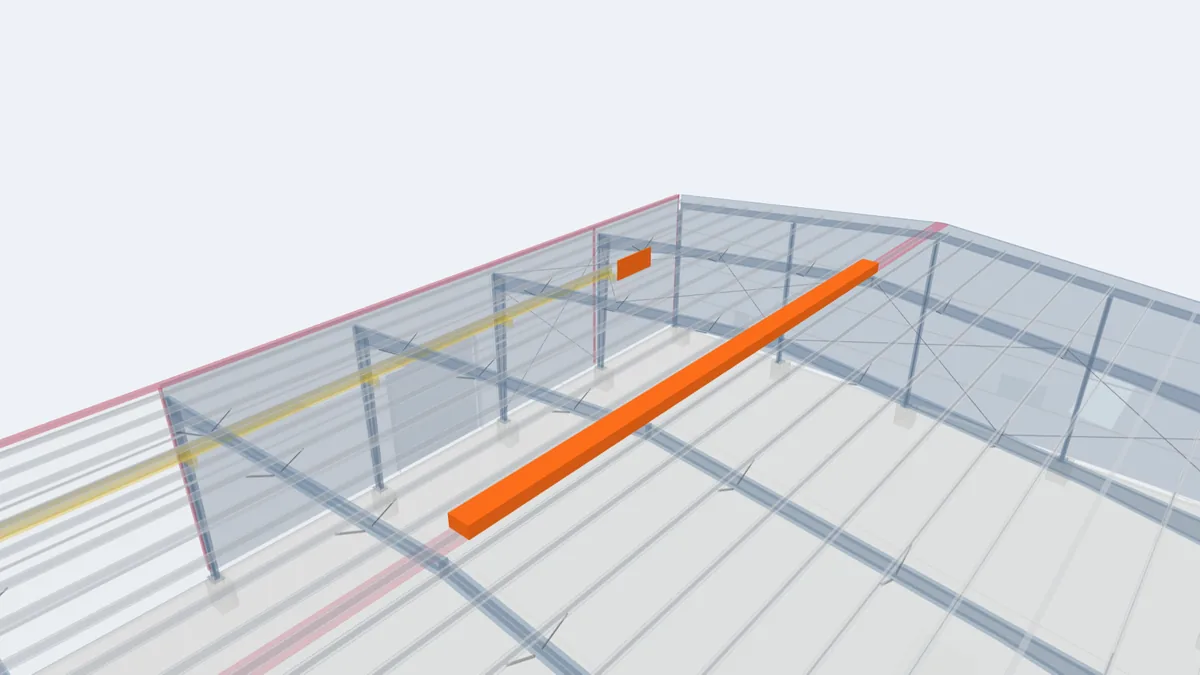
A ridge ventilator is an opening along the ridge with a weather cap and baffles that let air out while keeping rain out. Types include:
- Continuous ridge ventilators along the full or partial length of the ridge;
- Individual gravity ventilators at intervals along the ridge;
- Turbine ventilators that spin in the wind to increase extraction;
- Powered roof fans for buildings with high heat loads.
Ventilators may include dampers that can be closed, and bird or insect screens. The ventilator throat must be large enough for the intended air change; screens reduce the free area, which is accounted for in the design.
Wall louvers
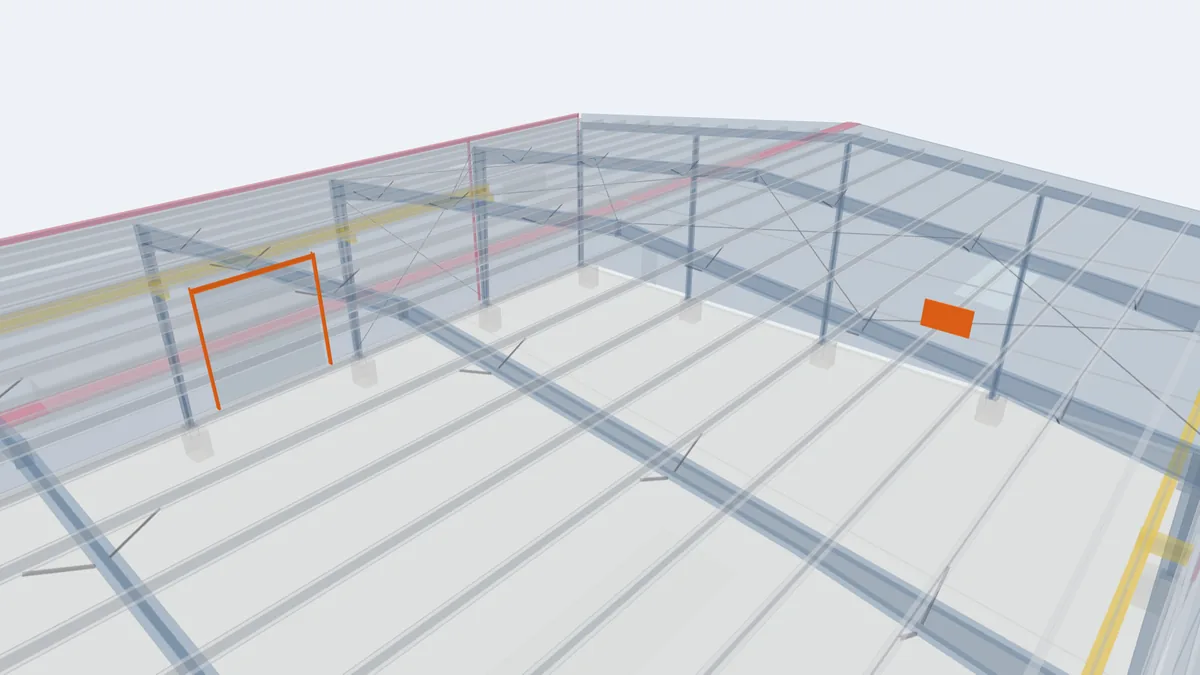
Louvers are fixed or adjustable blades in a frame, installed in the wall panels between girts. They let air in while shedding rain. Storm-proof louvers with deep blades or drainable profiles are used where wind-driven rain is heavy. Louvers are usually placed low in the walls, on the side facing prevailing winds where possible, to drive air across the working zone.
How much ventilation?
The required airflow depends on the heat sources (machines, lighting, people, sun on the roof), the stored goods and the desired comfort. The engineer or ventilation designer estimates air changes per hour and sizes the openings. As a rule, inlet area should be at least equal to outlet area for natural ventilation to work well.
Ventilation and insulation together
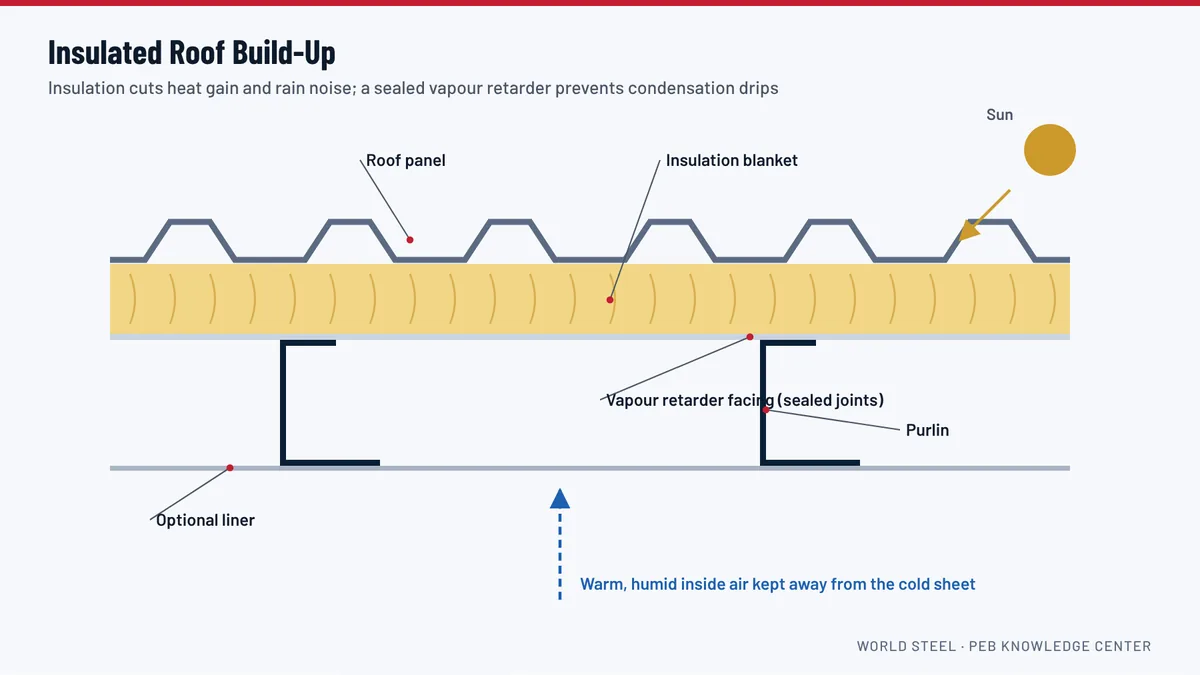
Ventilation removes heat that enters or is generated inside; insulation stops heat entering through the roof in the first place. In a hot climate the two together give a comfortable building at very low running cost.
See it in the 3D model
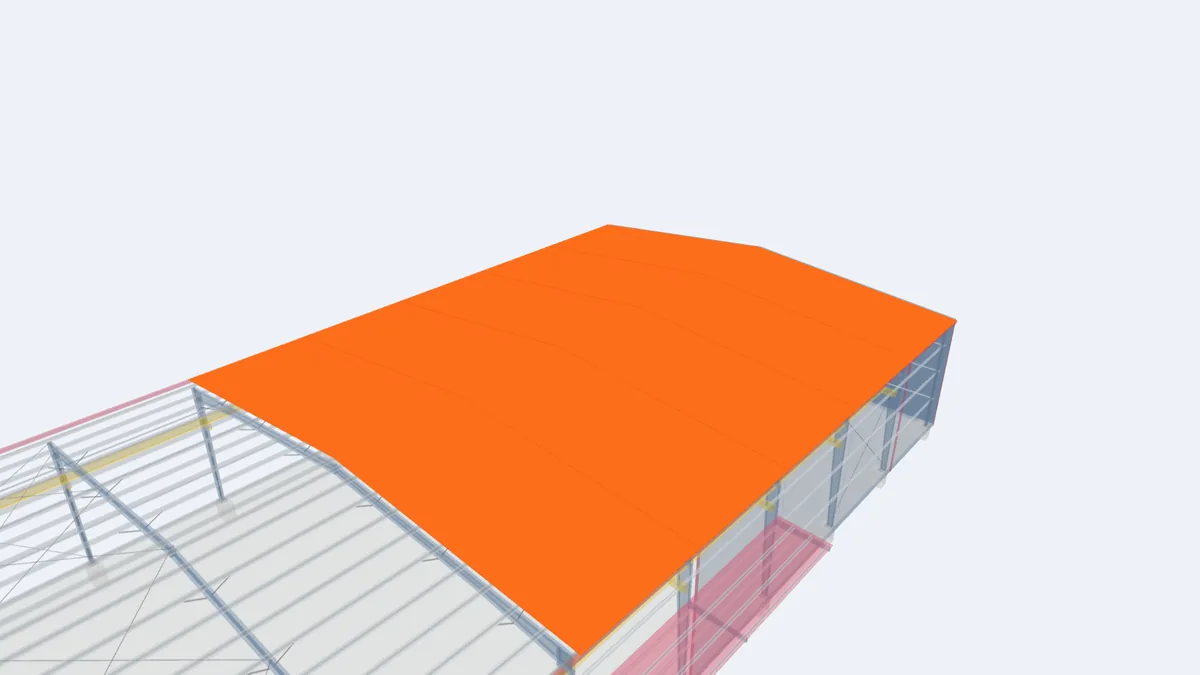
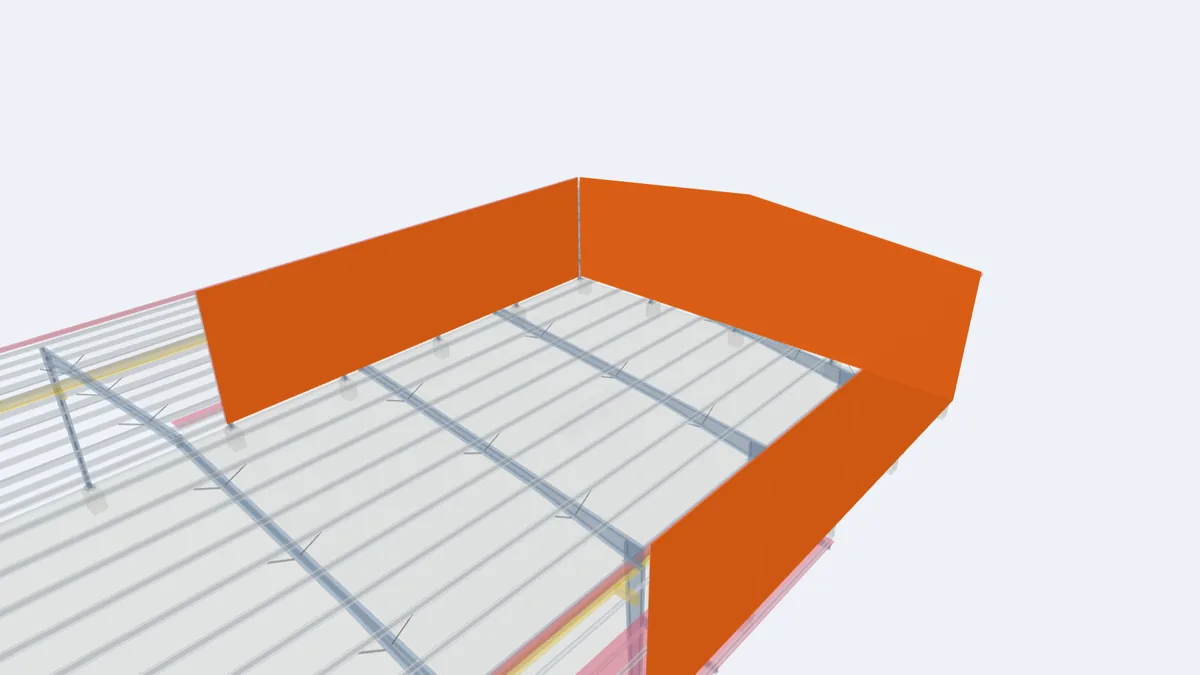
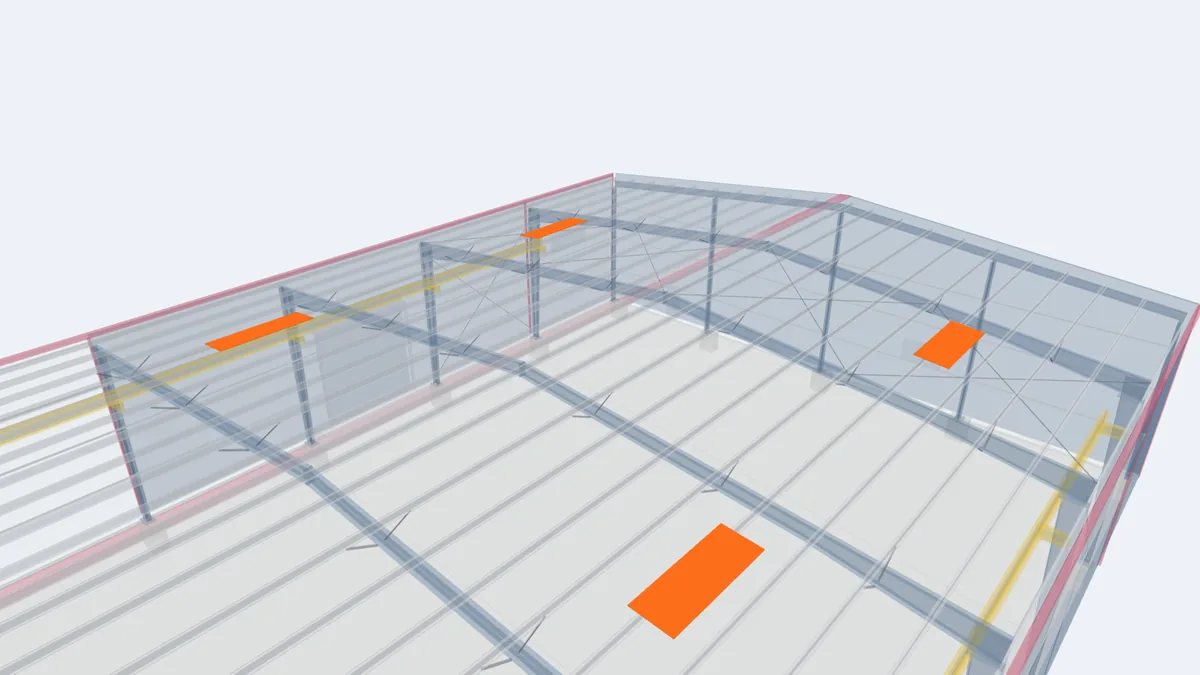
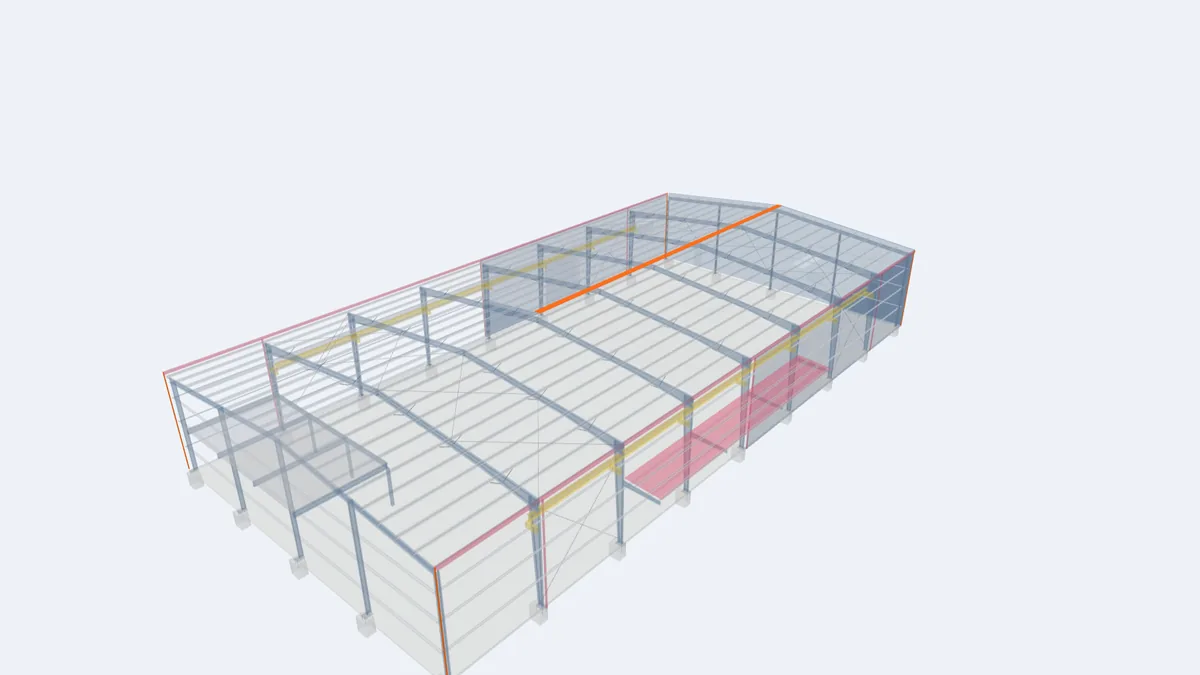
The highlighted elements show where this component sits in our model of a complete 30 × 60 m pre-engineered building. Rotate the model, click any element for its description, or open the full interactive model.
Show one component at a time in the full model: ridge ventilator, wall louver.
For projects in Guyana
Natural ventilation is very effective in Guyana's warm climate, especially for warehouses, workshops, rice mills and agricultural buildings. We specify ridge ventilators with rain baffles and storm-proof louvers for heavy tropical downpours, and include insect screens where needed. See agricultural steel buildings and building for Guyana's climate.
Frequently asked questions
Will rain come in through a ridge ventilator?
A properly designed ridge ventilator has baffles and a weather cap that shed rain. In extreme wind-driven rain, a little spray can enter, which is why dampers are available.
Are turbine ventilators better than ridge vents?
Turbines increase extraction when the wind blows. Continuous ridge vents provide a larger, steady outlet. Many buildings combine them.
Where should louvers be placed?
Low in the walls, ideally facing prevailing winds and away from dust or fume sources, with the outlets high at the ridge.