The steel in a roof or wall panel is thin, typically less than a millimetre, so it depends entirely on its coatings for durability. A well-specified panel in a suitable environment can serve for decades; the same panel in the wrong environment can show red rust at the edges within a few years. This guide explains the layers of a coated panel and how to choose them.
The layers of a coated panel
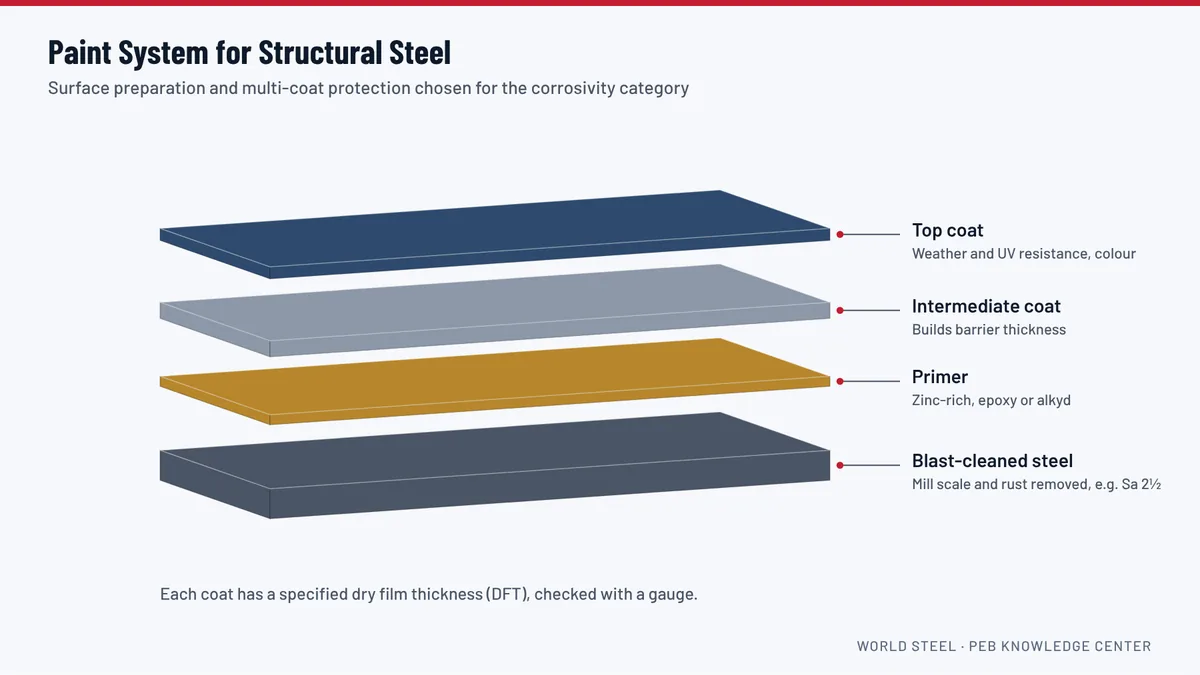
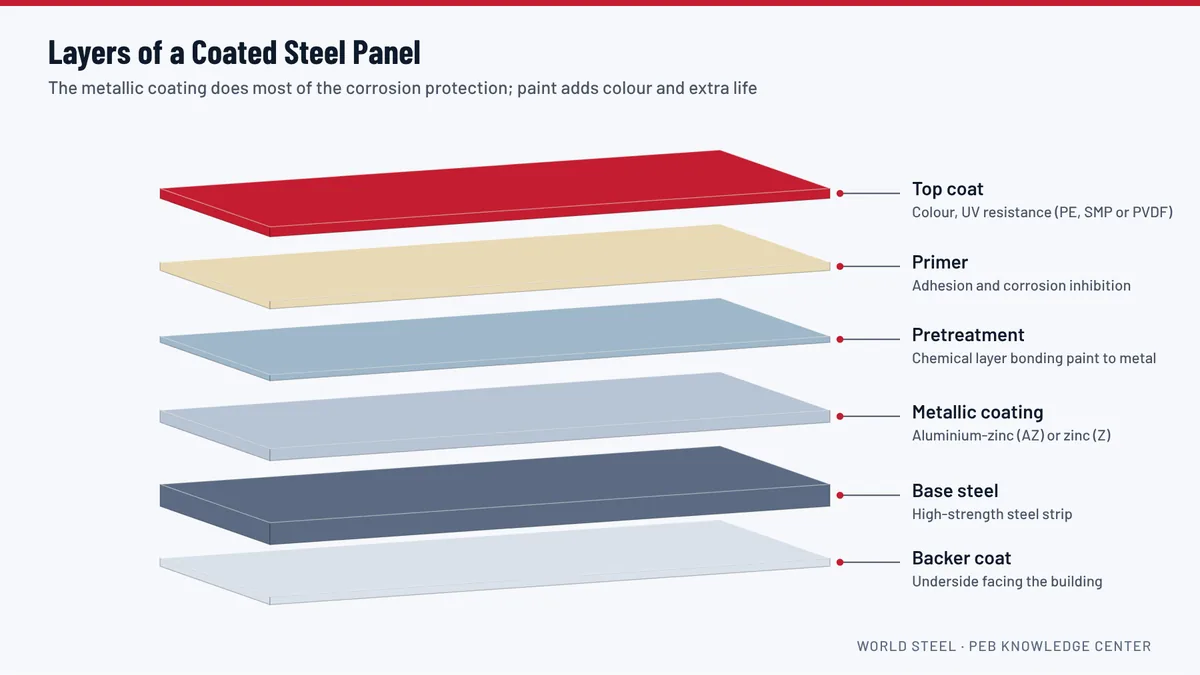
- Base steel: high-strength steel strip that gives the panel its strength.
- Metallic coating: zinc or aluminium-zinc, applied by hot-dipping the strip at the mill. This is the main corrosion protection: it acts as a barrier and, at cut edges and scratches, protects the steel sacrificially.
- Pretreatment: a chemical conversion layer that bonds the paint to the metallic coating.
- Primer: a thin layer that adds corrosion resistance and adhesion.
- Top coat: the colour layer facing the weather, providing UV resistance and appearance.
- Backer coat: a thinner coat on the underside, facing the inside of the building.
Metallic coatings
Zinc (galvanized) coatings are designated by the total mass on both sides, for example Z275 (275 g/m²). Aluminium-zinc coatings, about 55% aluminium, are designated, for example, AZ150. Aluminium-zinc generally provides longer life than zinc of similar mass in most atmospheres, which is why it is widely used for roofing. Heavier coatings last longer; the choice depends on the environment and the expected life.
Paint systems
- Polyester (PE): the standard coil coating, economical and suitable for mild to moderate environments.
- Silicone-modified polyester (SMP): better gloss and colour retention under strong sun.
- Polyvinylidene fluoride (PVDF): premium fluoropolymer finish with excellent UV and chemical resistance, used for demanding environments and architectural facades.
Paint thickness, colour and the coating manufacturer's warranty conditions for the specific site should be confirmed for each project.
Understanding the environment
Atmospheric corrosivity is classified in international standards such as ISO 9223 and ISO 12944 from C1 (very low) to CX (extreme). Distance from the sea, prevailing winds, humidity, rainfall washing, industrial fumes and animal housing all influence the category. A building a few hundred metres from surf can be in a far more aggressive category than one inland. Inside the building matters too: poultry houses, fertiliser stores and some food plants create corrosive internal atmospheres that attack the underside of the roof.
Details that make coatings last
- Avoid contact between panels and incompatible metals such as copper, and avoid runoff from copper pipes onto the roof.
- Remove drilling swarf from the roof the same day; steel filings rust and stain the coating.
- Store bundles dry and ventilated; water trapped between sheets causes staining.
- Wash areas not rinsed by rain, such as under eaves and canopies, periodically in coastal zones.
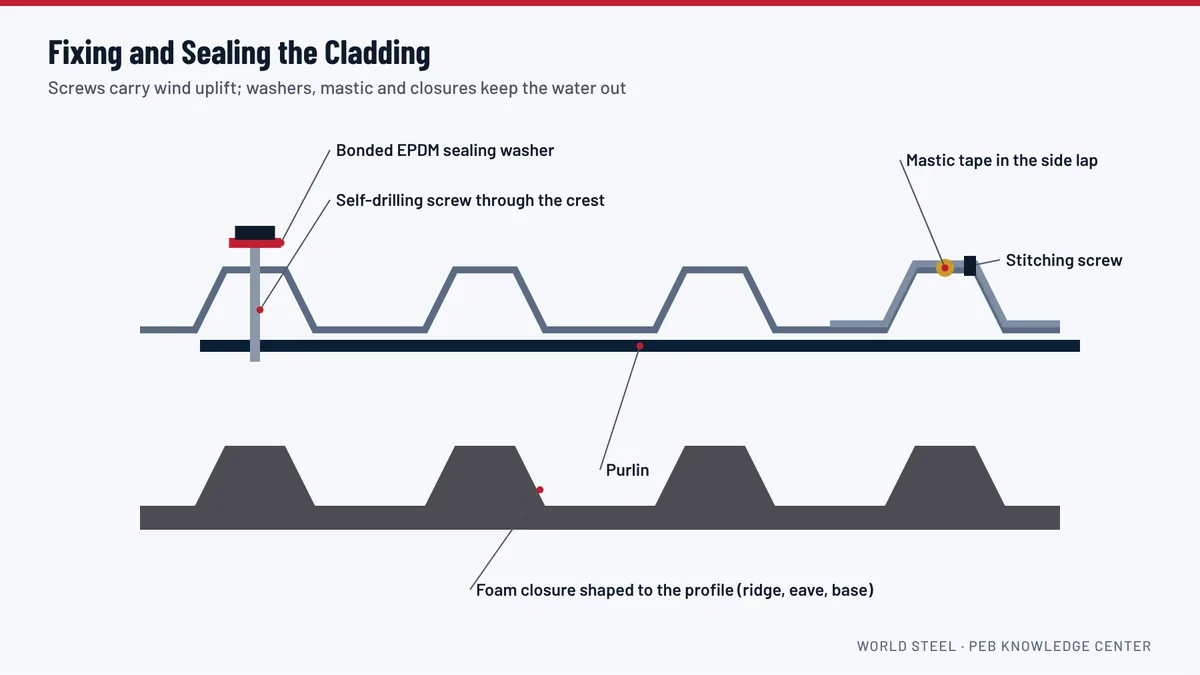
- Use fasteners with corrosion resistance matching the panels.
For projects in Guyana
Most of Guyana's population and industry sits on the Atlantic coastal plain and along the major rivers, where humidity is high all year and sea salt can be carried inland. We assess each site's exposure and propose the metallic coating and paint system accordingly, usually aluminium-zinc with a paint class to suit. Pending verification confirm the standard panel coating options World Steel offers for coastal Guyana projects Read corrosion protection for steel structures in Guyana.
Frequently asked questions
What does AZ150 mean?
An aluminium-zinc metallic coating with a total mass of 150 g/m², counting both sides of the steel strip.
Is PVDF worth the extra cost?
For aggressive coastal or industrial sites, and for facades where colour retention matters, often yes. For sheltered inland buildings, polyester or SMP may be sufficient.
Do cut edges rust?
Metallic coatings protect cut edges sacrificially, but in aggressive environments edges may show some staining over time. Correct detailing and maintenance limit it.