The roof panel is the part of a steel building that faces the weather every day. It must keep out tropical downpours, resist wind suction at the edges and corners, reflect heat, and last for decades with little maintenance. A good roof panel specification considers the profile, the steel thickness, the metallic coating, the paint finish and the fasteners together, because a weakness in any one of them shortens the life of the roof.
Panel profiles
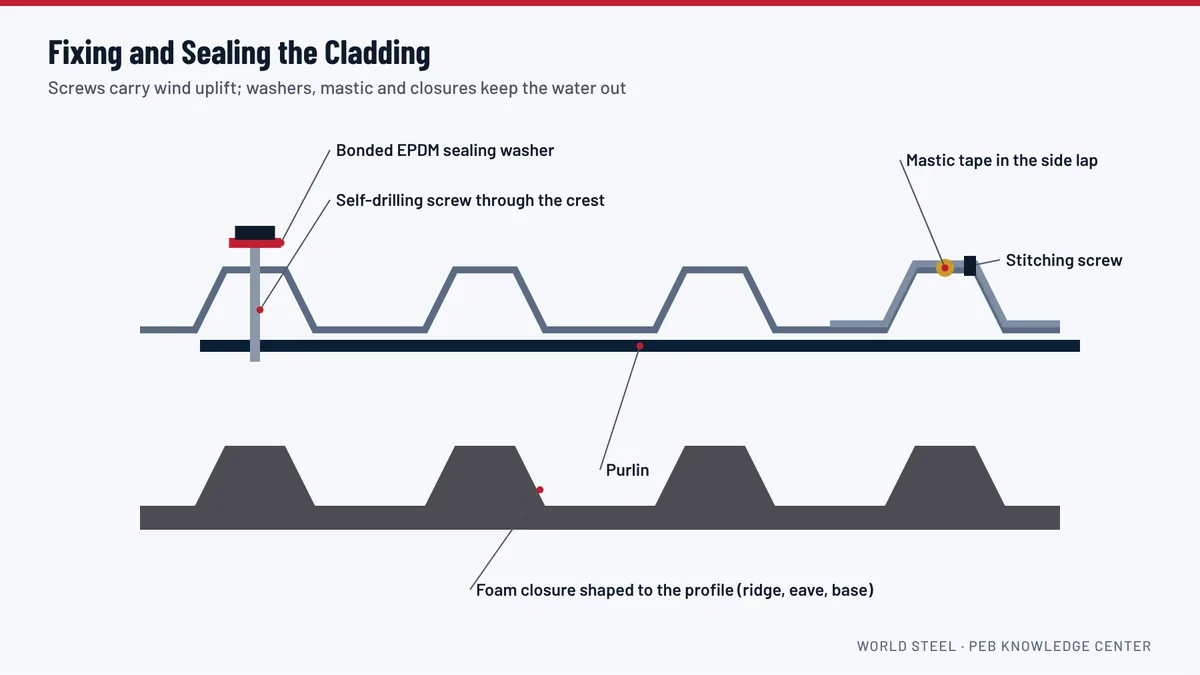
- Through-fastened trapezoidal panels: the most common PEB roof. The panel has high ribs at regular centres and is screwed through to the purlins. It is economical and robust, but every screw is a potential leak point, so screw type, washer quality and installation matter.
- Standing seam panels: the panels are joined by a raised, folded seam and held by concealed clips. There are no exposed screws on the roof surface, and the panels can expand and contract freely. They suit long roof slopes, very low slopes and buildings where watertightness is critical.
The rib height and spacing determine how much water the panel can carry down the slope and how far it can span between purlins. Long roof slopes in heavy rain need deeper ribs.
Steel and metallic coating
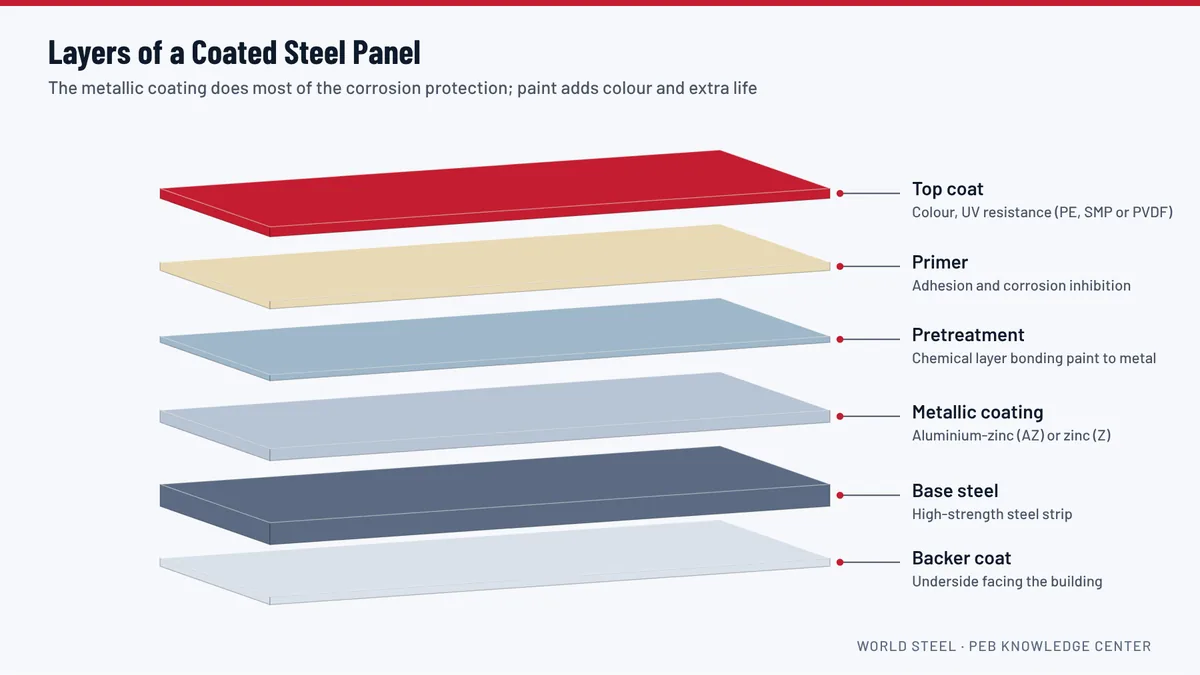
Roof panels are roll-formed from high-strength steel coil. The base steel is protected by a metallic coating applied at the steel mill, typically an aluminium-zinc alloy (for example AZ150, meaning 150 g/m² of coating over both sides) or zinc (galvanized, for example Z275). Aluminium-zinc coatings generally offer longer life in most atmospheres. The metallic coating is the main barrier against corrosion; the paint on top adds colour, extra protection and solar reflectance. Coating options are explained in panel coatings.
Thickness
Panel thickness is stated as base metal thickness (BMT) or total coated thickness (TCT). Always compare offers on the same basis. Thicker panels span further, resist foot traffic and wind better, and dent less, but cost more. The required thickness depends on purlin spacing, wind load and the profile's load tables.
Fixing and wind uplift
At the edges and corners of a roof, wind suction is much higher than in the middle. The fastener pattern, the number of screws per purlin and the purlin spacing are therefore increased in these zones. Fasteners must be installed exactly as shown on the sheeting layout: one missing screw per panel at the eave can allow wind to start peeling the roof.
Laps, slope and sealing
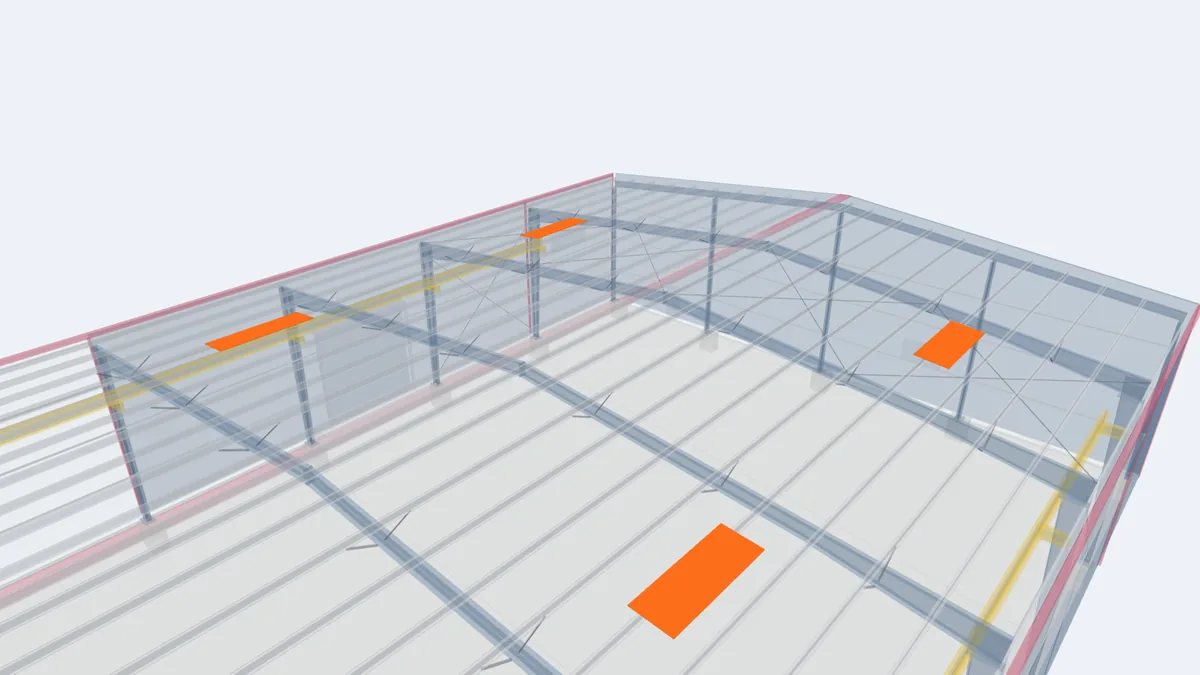
Panels overlap at the sides by one rib and, on long slopes, at the ends. On low slopes, side laps and end laps are sealed with mastic tape. The minimum roof slope depends on the profile; trapezoidal panels need more slope than standing seam panels. Skylight panels, ridge ventilators and roof penetrations are all integrated into the panel layout; see skylights and ventilation.
Heat and noise
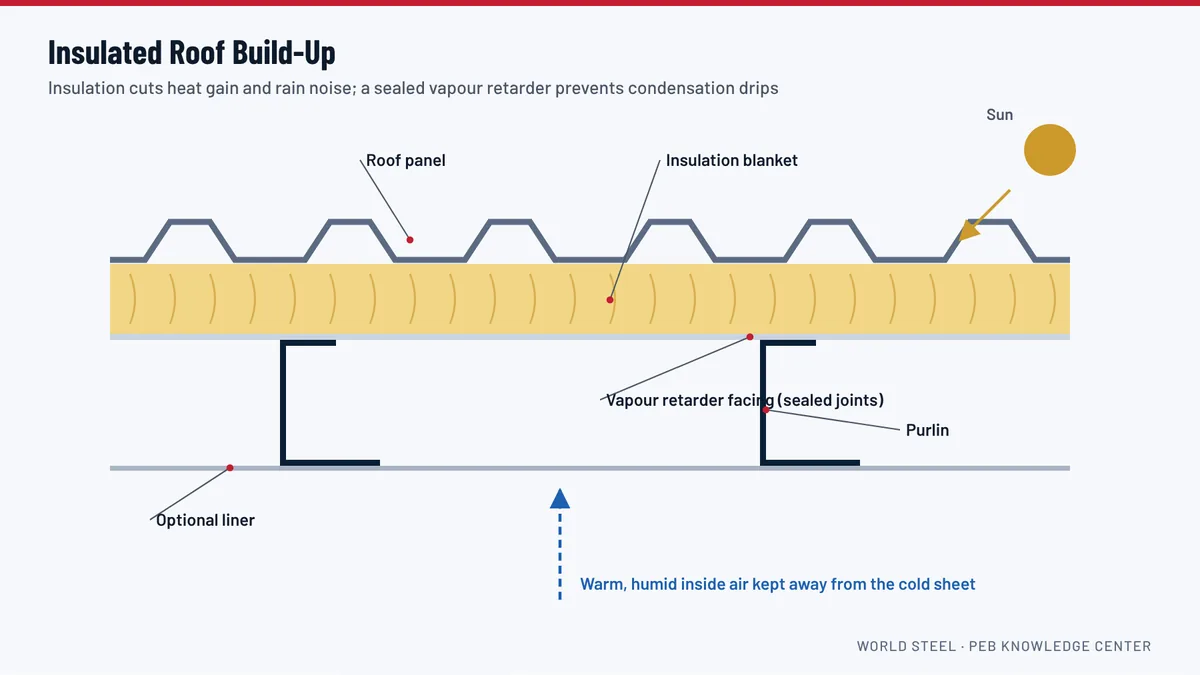
Light-coloured or reflective coatings reduce heat gain through the roof. In tropical climates, roof insulation or an insulated sandwich panel greatly improves comfort and controls condensation; heavy rain on a bare steel roof is also loud, which insulation reduces. See insulation.
See it in the 3D model
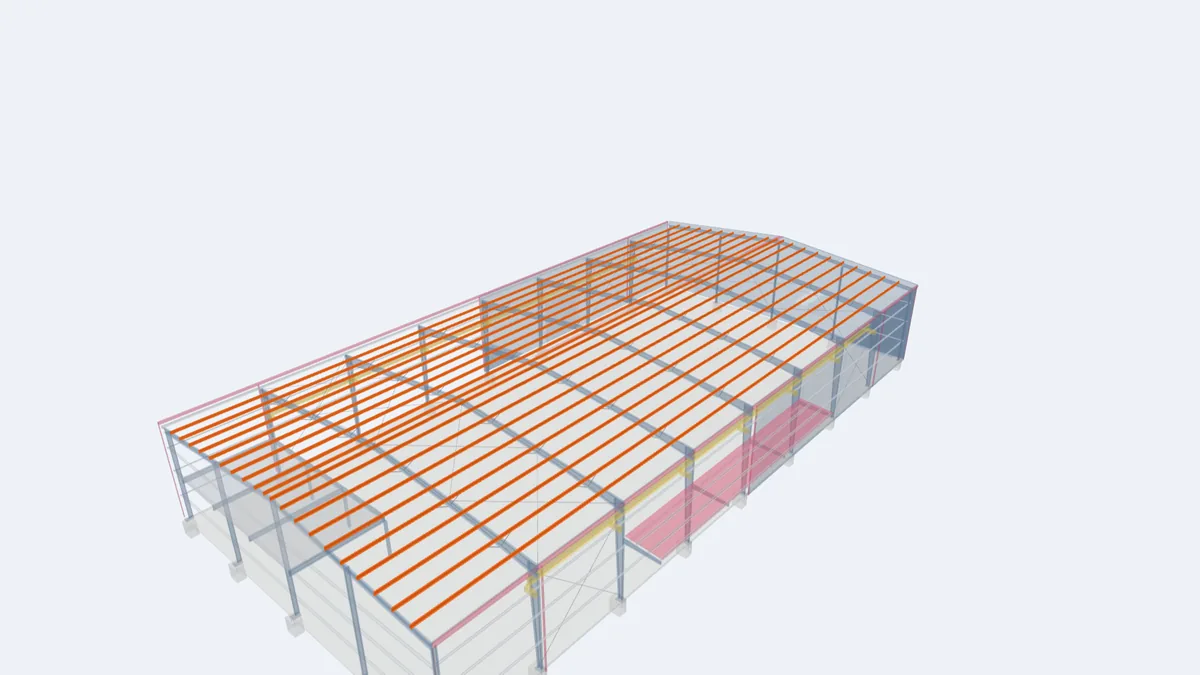
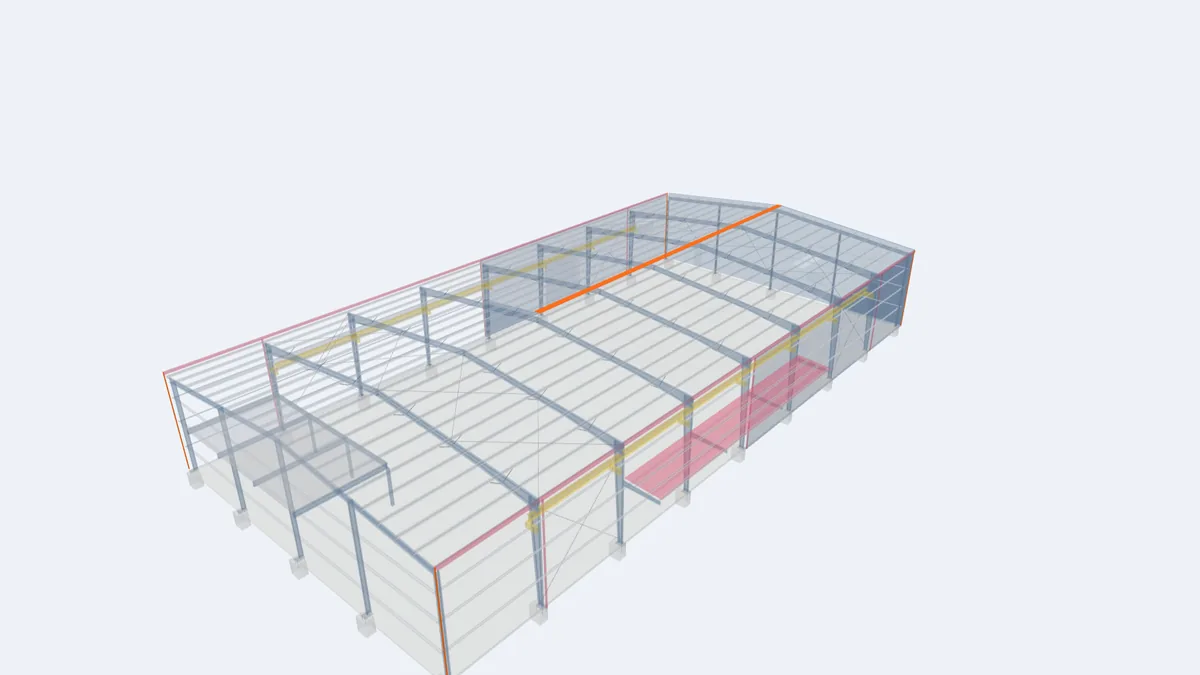
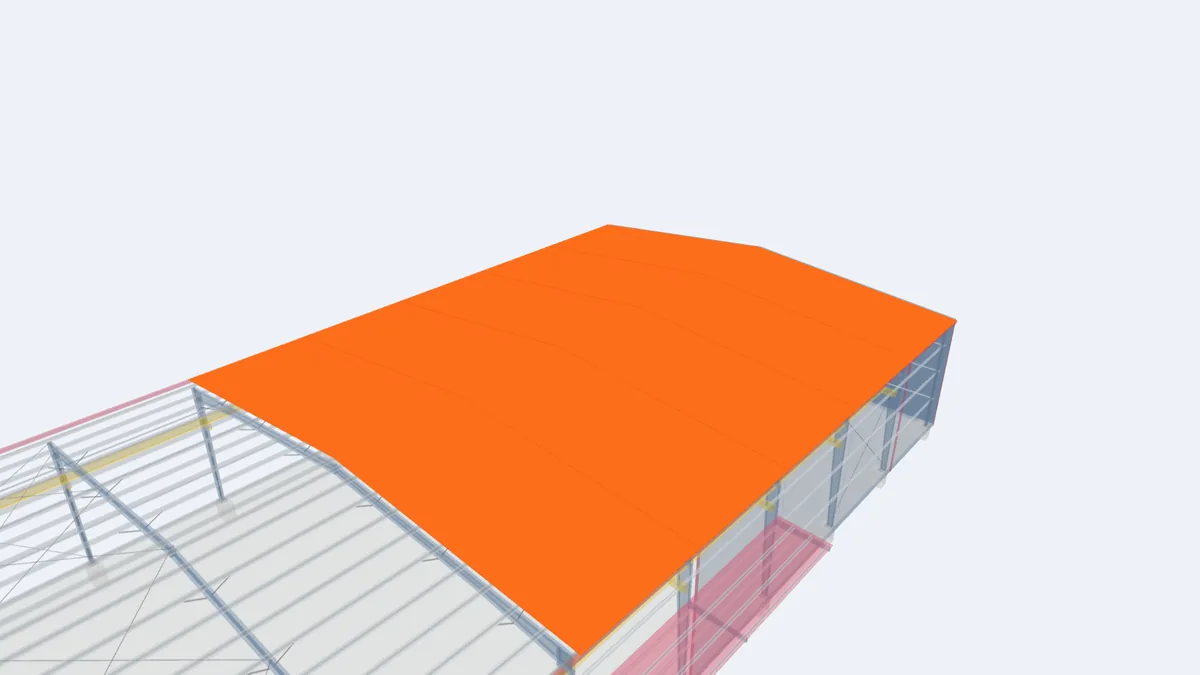
The highlighted elements show where this component sits in our model of a complete 30 × 60 m pre-engineered building. Rotate the model, click any element for its description, or open the full interactive model.
For projects in Guyana
For Guyana, we select roof panels for heavy tropical rain, humidity and, near the coast, salt-laden air. We recommend aluminium-zinc coated steel with a colour coating suited to the exposure, light colours for heat reflection, and fasteners at least as durable as the panel. See steel buildings for Guyana's climate and corrosion protection.
Frequently asked questions
What thickness of roof sheet should I use?
It depends on purlin spacing, wind load and the profile. Common base metal thicknesses are 0.40 to 0.60 mm. Compare quotations on the same basis, BMT or TCT.
Is standing seam better than screw-fixed roofing?
Standing seam has no exposed screws and suits long or low-slope roofs. Through-fastened panels are more economical and perform well when correctly installed.
Why are there more screws at the roof edges?
Wind suction is highest at eaves, ridges, gables and corners, so the fixing is increased there.