The frames, purlins and girts of a steel building are designed to last as long as the building, but only if they are protected from corrosion. For the primary steel, which is fabricated from bare plate, protection comes from surface preparation and a paint system applied in the factory. Choosing that system well, and applying it properly, is one of the most important decisions in a steel building specification.
Surface preparation
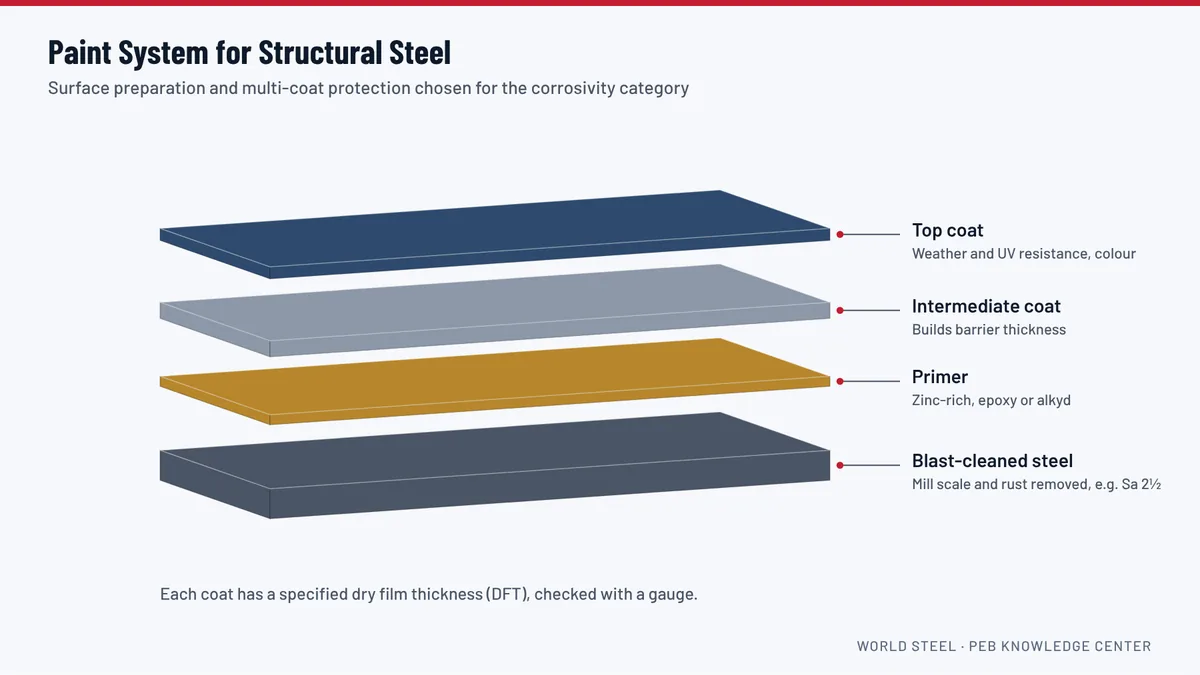
Paint adheres only as well as the surface beneath it. Steel plate arrives with mill scale, rust and oil, all of which must be removed. The best method is abrasive blast cleaning, which removes scale and rust and gives the surface a profile that the primer can key into. Cleanliness is graded by ISO 8501-1; Sa 2½ (very thorough blast cleaning) is a common specification for good-quality systems. Where blast cleaning is not specified, power-tool cleaning is used for less demanding environments. Sharp edges, weld spatter and surface defects are dressed before painting.
Paint systems
A paint system is a combination of coats, each with a role:
- Primer: adheres to the steel and provides corrosion inhibition. Zinc-rich primers protect the steel sacrificially, like galvanizing; epoxy primers provide strong barrier protection; alkyd primers are economical for mild interiors.
- Intermediate coat: builds thickness and barrier protection, often a high-build epoxy.
- Top coat: resists UV and weather and gives colour, often polyurethane for exposed steel.
Each coat has a specified dry film thickness (DFT), measured in microns with a gauge. Total DFT and the number of coats increase with the severity of the environment and the required durability.
Choosing a system
The international standard ISO 12944 links paint systems to atmospheric corrosivity categories (C1 to CX) and durability ranges. A dry, heated interior needs very little; a coastal or industrial exterior needs a robust multi-coat system. Inside the building, conditions vary too: an air-conditioned office is mild, while a poultry house, fertiliser store or wet process area is aggressive. The paint specification should reflect the environment of each part of the structure.
Secondary steel
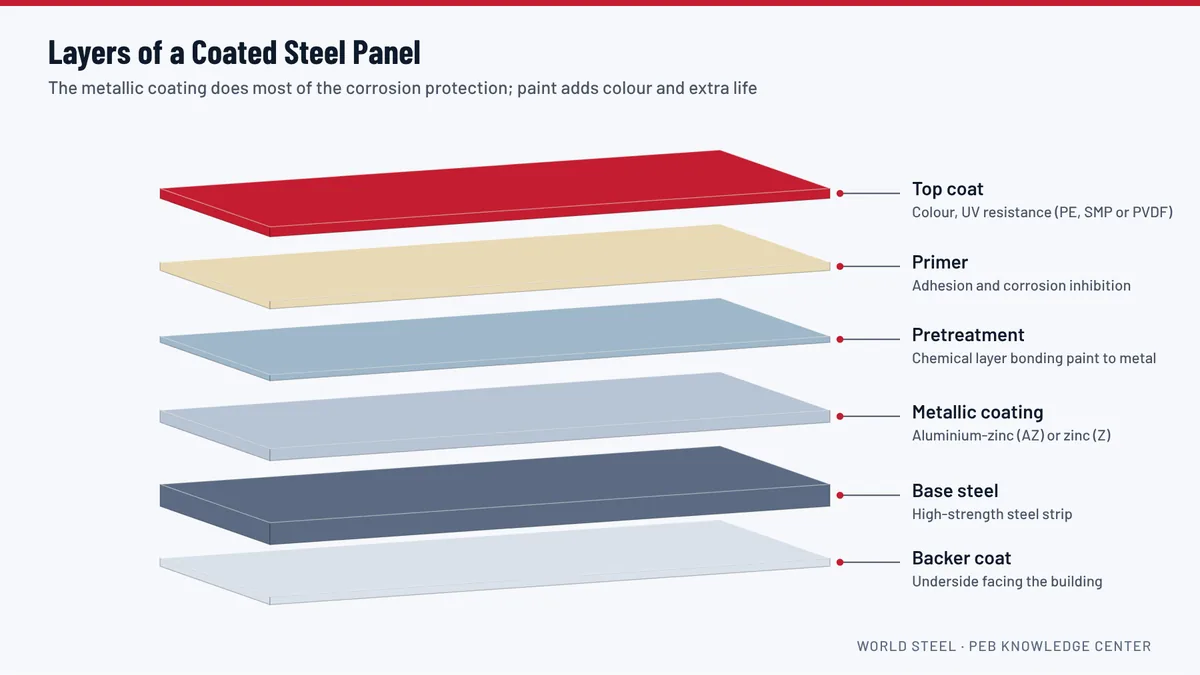
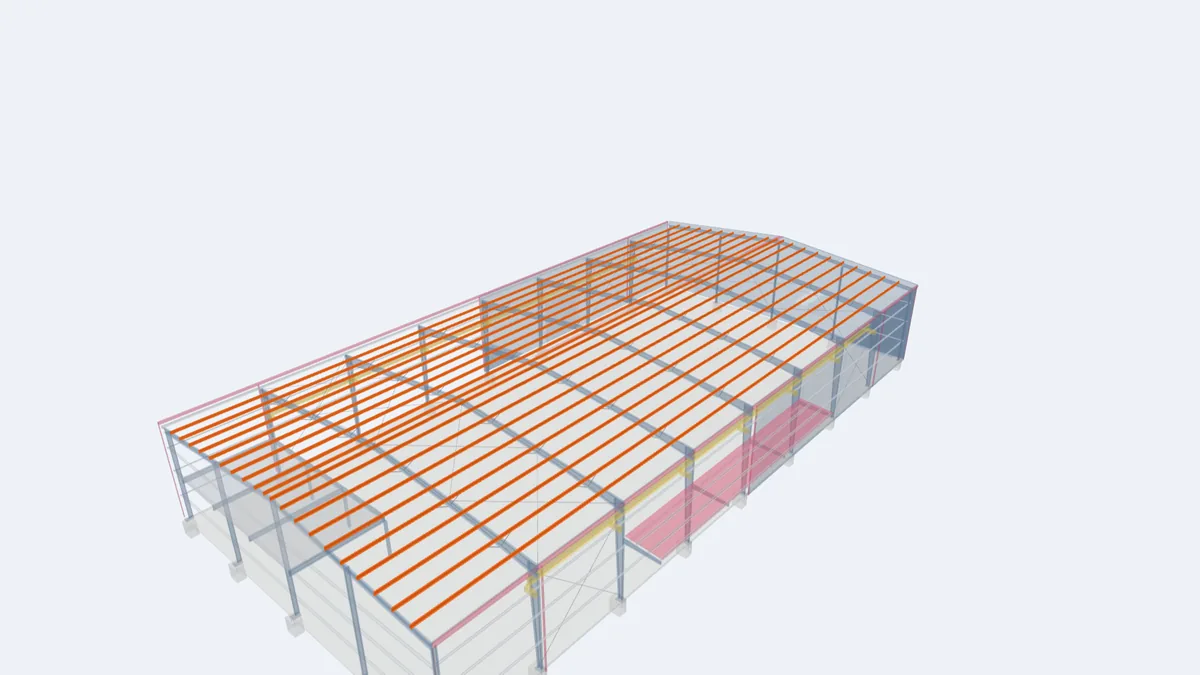
Purlins, girts and eave struts are usually roll-formed from pre-galvanized coil, which gives them a metallic coating from the steel mill, or from black steel painted after forming. In humid or coastal environments, the zinc coating mass and any additional paint deserve the same attention as the primary steel.
Hot-dip galvanizing
For very aggressive environments or exposed structures, members can be hot-dip galvanized after fabrication, giving a thick zinc coating inside and out. Galvanizing affects fabrication details, member size limits and cost, and can be combined with paint in a duplex system. See hot-dip galvanizing for steel structures.
Handling, touch-up and maintenance
Coatings can be damaged during loading, shipping and erection. The supply includes touch-up paint, and damaged areas should be cleaned and repaired as soon as possible. Bolted connections and site welds (if any) are treated after erection. A maintenance plan with periodic inspection keeps the system performing for its design life.
For projects in Guyana
For Guyana projects, World Steel proposes the surface preparation and paint system based on the site's exposure, from inland interiors to coastal and riverside sites. Steel is painted in our factory in Vietnam, with DFT recorded during inspection, and touch-up paint is shipped with the kit. Pending verification list of standard paint systems and DFTs World Steel offers per exposure category Read corrosion protection for steel structures in Guyana.
Frequently asked questions
Is a single coat of primer enough?
For dry, mild interiors it can be. For humid, coastal or exposed conditions, a multi-coat system with greater thickness is recommended.
What does Sa 2½ mean?
A grade of blast cleaning defined in ISO 8501-1, meaning very thorough removal of mill scale, rust and contaminants, leaving only slight staining.
Should I galvanize the whole building?
Usually not. Galvanizing is best for very aggressive exposures or exposed members. A good paint system protects most PEB frames well.