Steel does not burn, but it loses strength as it heats up. In a severe fire, unprotected steel members can lose a large part of their strength at temperatures that a fully developed fire can reach. Whether a steel building needs fire protection, and how much, depends on the building code, the use of the building, its size and height, and the distance to neighbouring buildings. This guide explains the principles so you can discuss the requirements with your architect, engineer and the fire authority.
When is fire resistance required?
Building codes classify buildings by use and size. Many single-storey industrial and storage buildings, where people can escape quickly and the roof is light, require little or no fire resistance for the structure itself. Requirements increase for:
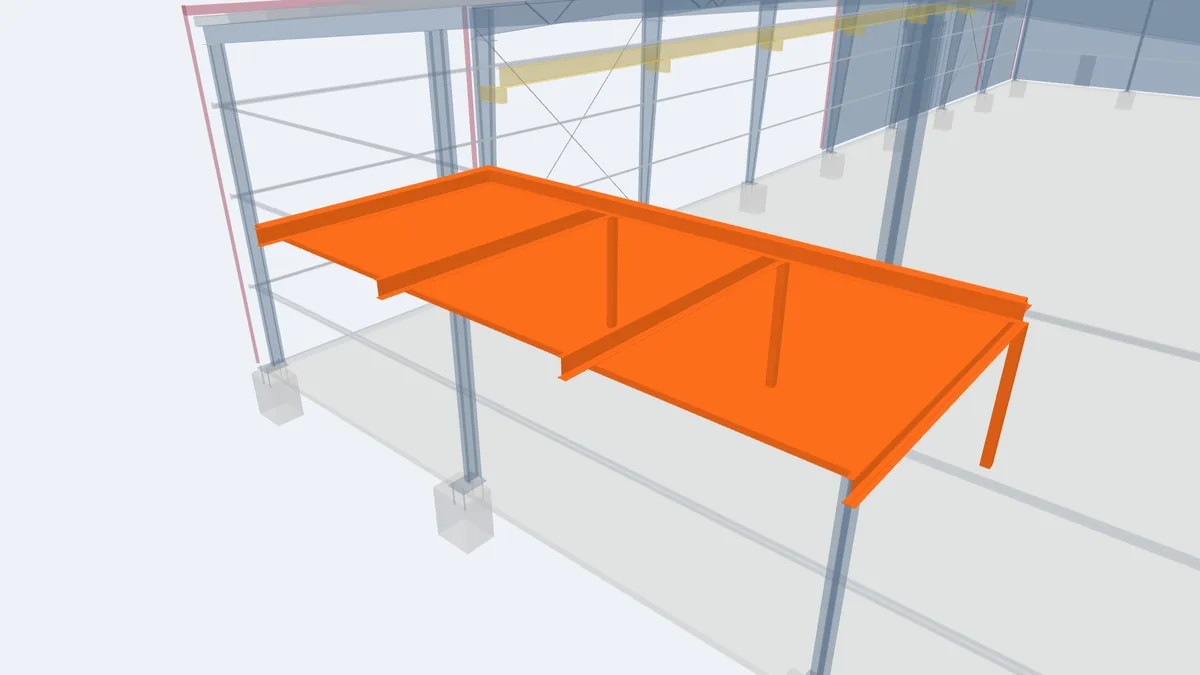
- buildings with mezzanines or multiple storeys;
- buildings with many occupants, such as halls, schools or offices;
- large compartments storing combustible goods;
- walls close to a boundary or another building, to limit fire spread;
- escape routes and protected stairs.
Fire resistance is expressed in minutes, such as 30, 60 or 120, for a structural element tested or assessed to a standard fire. The client's architect or fire engineer determines the ratings required.
Passive fire protection
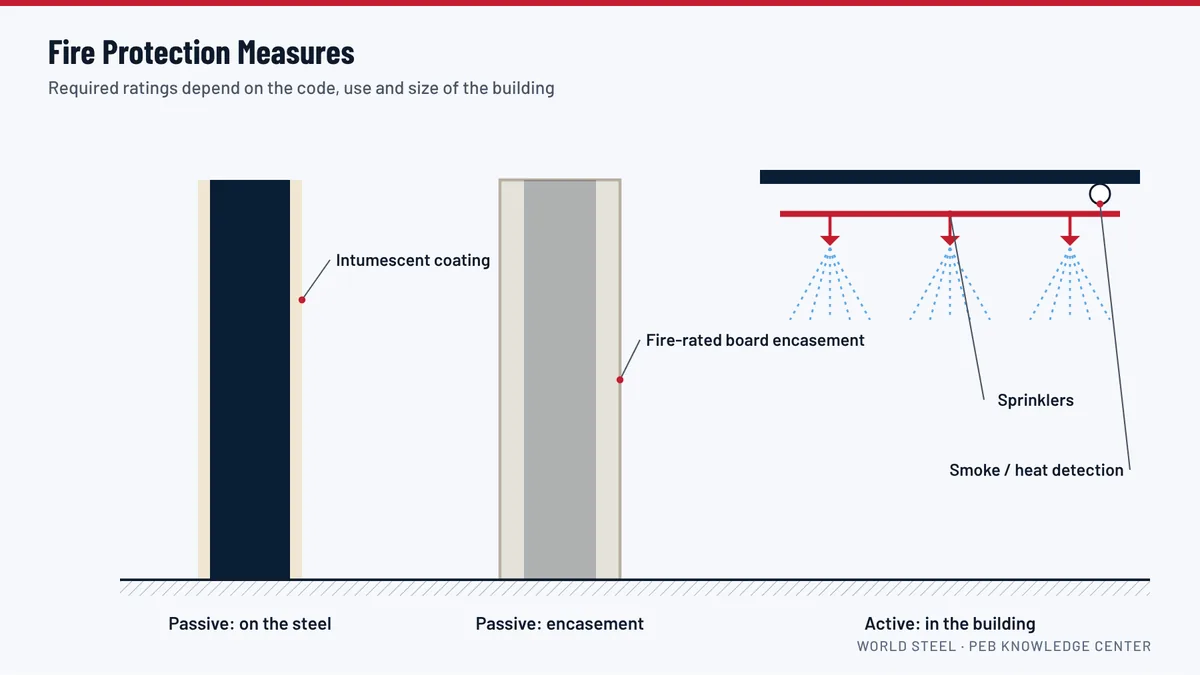
- Intumescent coatings: thin paint-like layers that swell into an insulating char when heated. They keep the steel's appearance and can be applied in the factory or on site. Thickness depends on the required rating and the size of the section.
- Fire-rated boards: gypsum or calcium silicate boards fixed around columns and beams.
- Sprayed protection: cementitious or fibrous sprays, economical for hidden members.
- Fire walls and compartmentation: masonry or fire-rated panel walls that divide the building to limit the spread of fire.
Active fire protection
- Detection and alarm systems give early warning so people can escape.
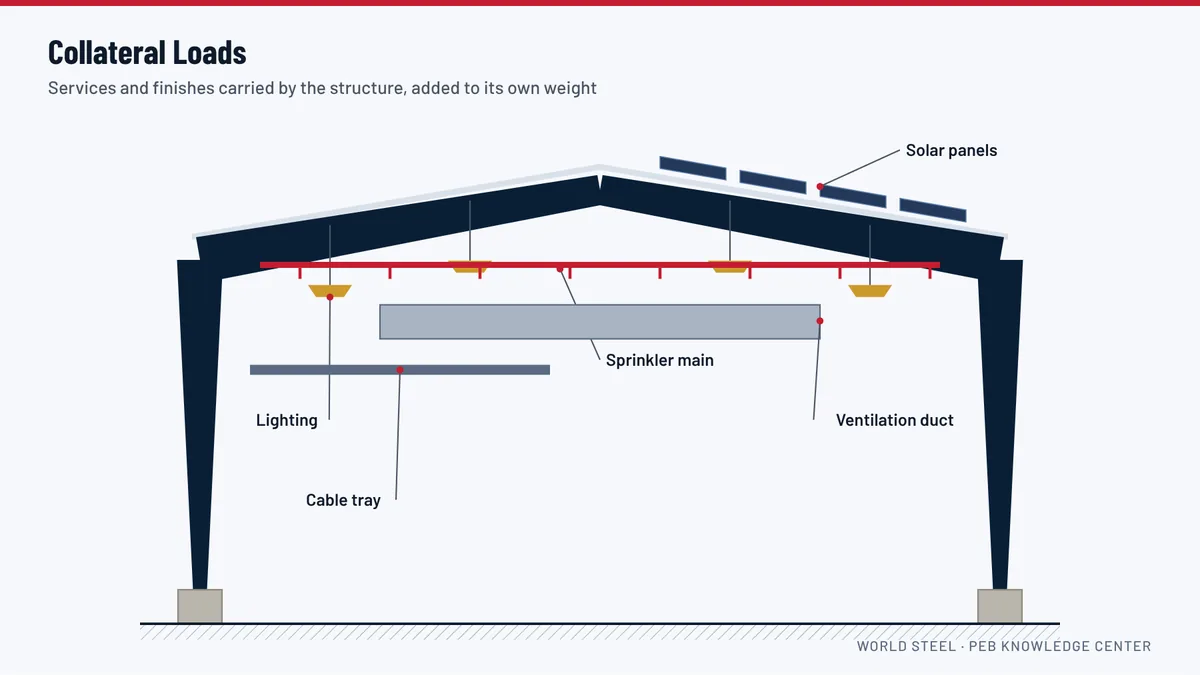
- Sprinklers control or extinguish fires early; their pipes add collateral load to the roof structure.
- Hydrants and hose reels for firefighting.
- Smoke and heat vents in the roof to keep escape routes clear.
Cladding and insulation
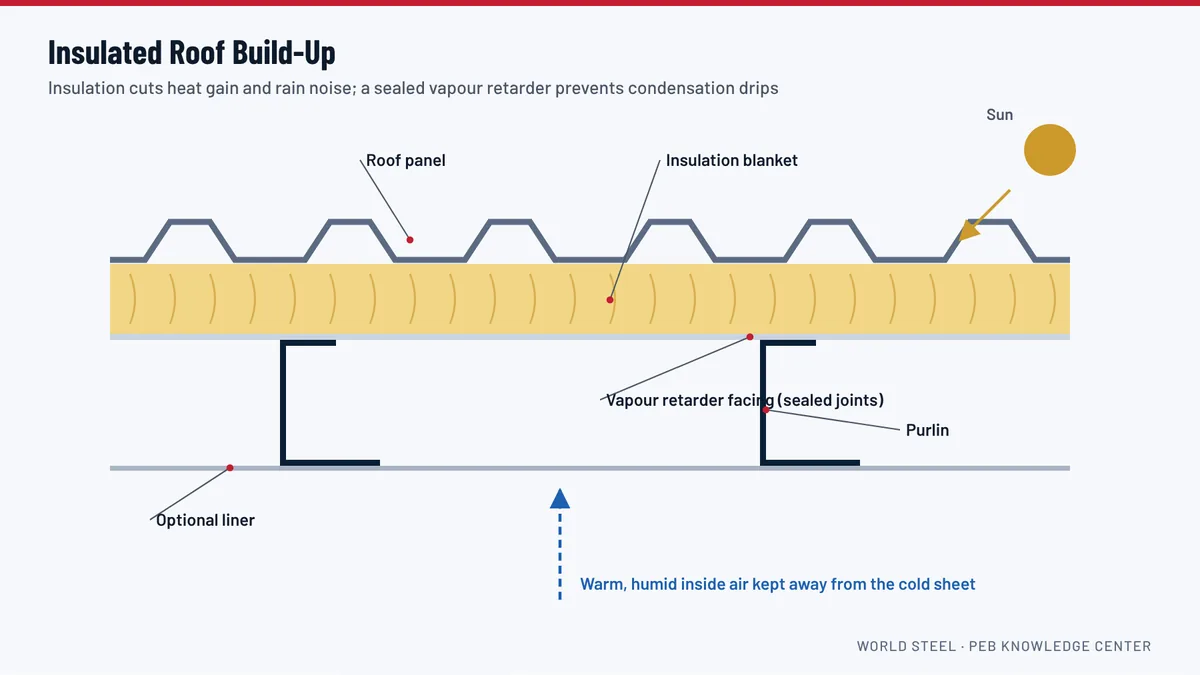
Steel cladding is non-combustible, but insulation cores vary. Mineral wool cores offer the best fire performance; foam cores must meet the reaction-to-fire requirements of the code for the building's use. Specify insulation with fire performance in mind.
Coordination
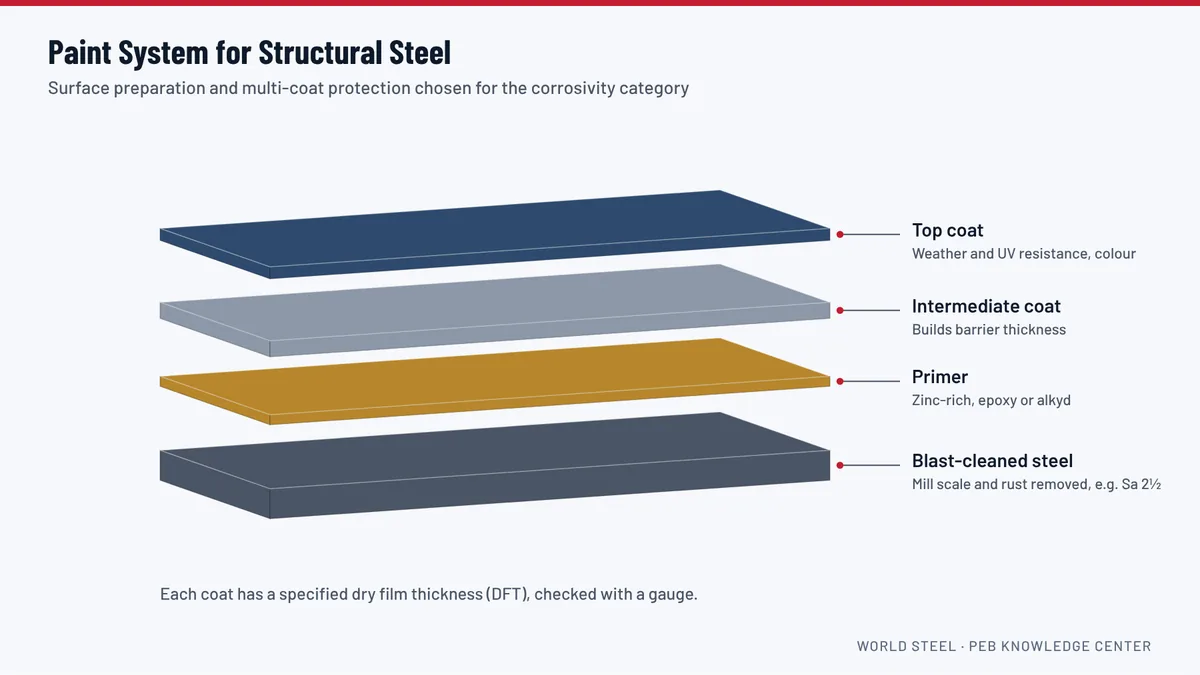
Fire protection affects the steel design (section sizes influence coating thickness), the paint system (intumescent coatings must be compatible with the primer), the collateral loads (sprinklers) and the layout (escape distances, doors). Raise fire requirements early, before the drawings are approved.
For projects in Guyana
Fire safety requirements for buildings in Guyana are set by the applicable regulations and reviewed by the authorities, including the Guyana Fire Service. Pending verification confirm the fire safety approval process and applicable code for industrial buildings in Guyana World Steel can supply steel with compatible primers for intumescent coatings and design for sprinkler loads; ratings are determined by the client's architect or fire engineer.
Frequently asked questions
Does my warehouse need fire-rated steel?
Many single-storey warehouses need little or no structural fire rating, but it depends on the code, size, use and distance to boundaries. Confirm with your architect and the fire authority.
What is intumescent paint?
A coating that swells into an insulating layer when heated, slowing the temperature rise of the steel during a fire.
Are steel panels fireproof?
Steel sheets are non-combustible, but the insulation inside sandwich panels varies. Mineral wool cores perform best in fire.